
The JoyScape: Community Storytelling through Data
ABOUT
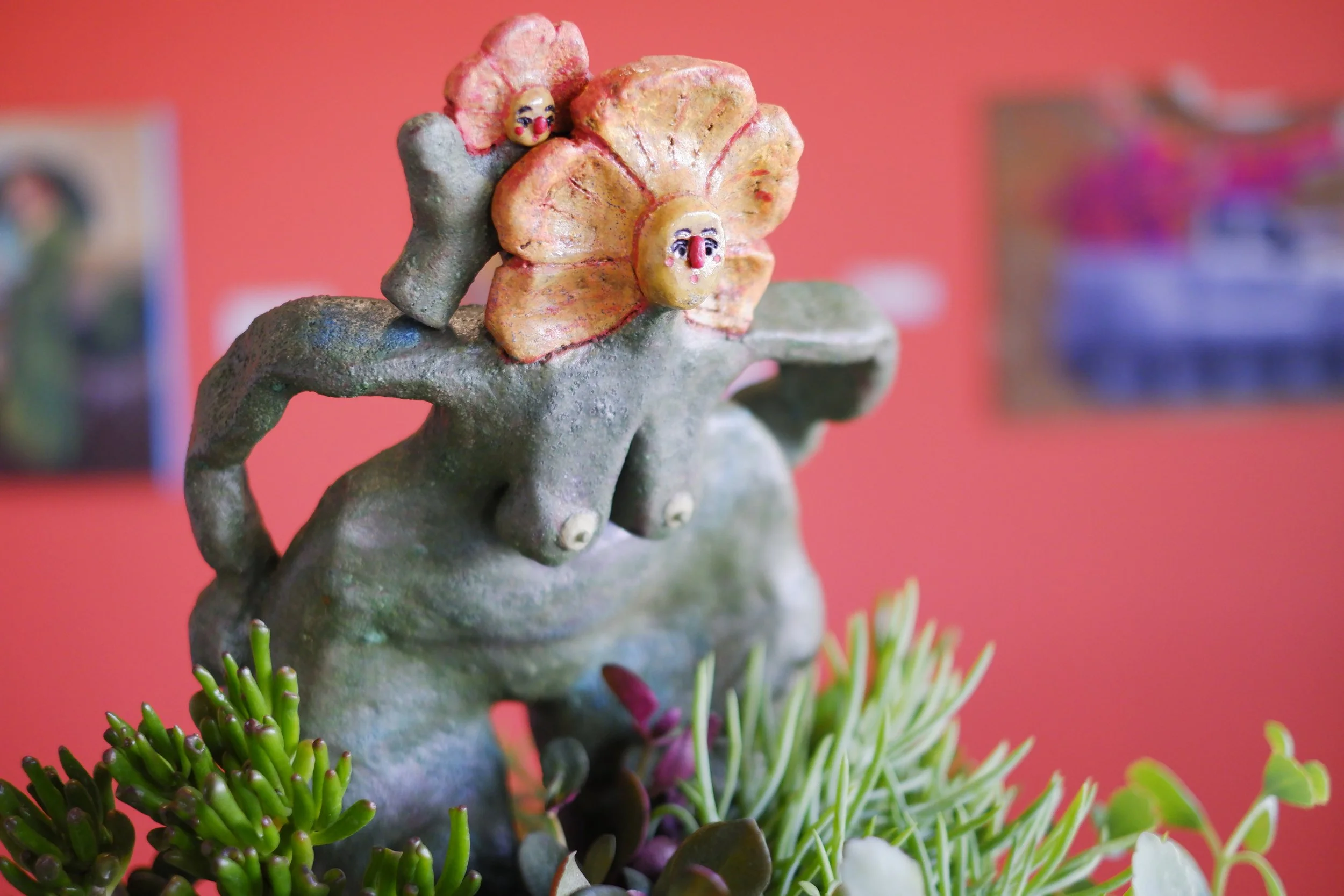
Joyscape (noun):
A framework for identifying, mapping, and measuring the sources of joy within a community—such as relationships, cultural expression, safe spaces, nature, and collective belonging—and the social, economic, and environmental conditions that allow them to thrive or decline.
Culture is quite often considered the manifestation of a healthy, wealthy, and thriving society.
At The JoyCore Project, we use the Joy Access Framework to consider what changes when we consider culture the foundation of community wellness and wealth?
We asked the community to offer us their stories as “data.”
We began with artists because we recognize them as beacons of joy, creators of culture, and agents of change.
We also recognize them as cultural “canaries in the coal mine.”
If artists stop making art (or have to leave Fresno in order to survive) — what does that say about the conditions we exist in?
This is just the beginning of our collective storytelling.
This first round of data, provided so many more rich opportunities for deeper exploration and reflection — make sure to check out our section, “What’s next?” — for more on what’s to come.
Thank you to everyone who participated, we hope this leads to many more conversations about what it looks like to invest in our JoyScape across Fresno & beyond.
People-First Approach
Joy is Our Birthright
Our Stories Matter
People-First Approach Joy is Our Birthright Our Stories Matter
Who Responded?
-
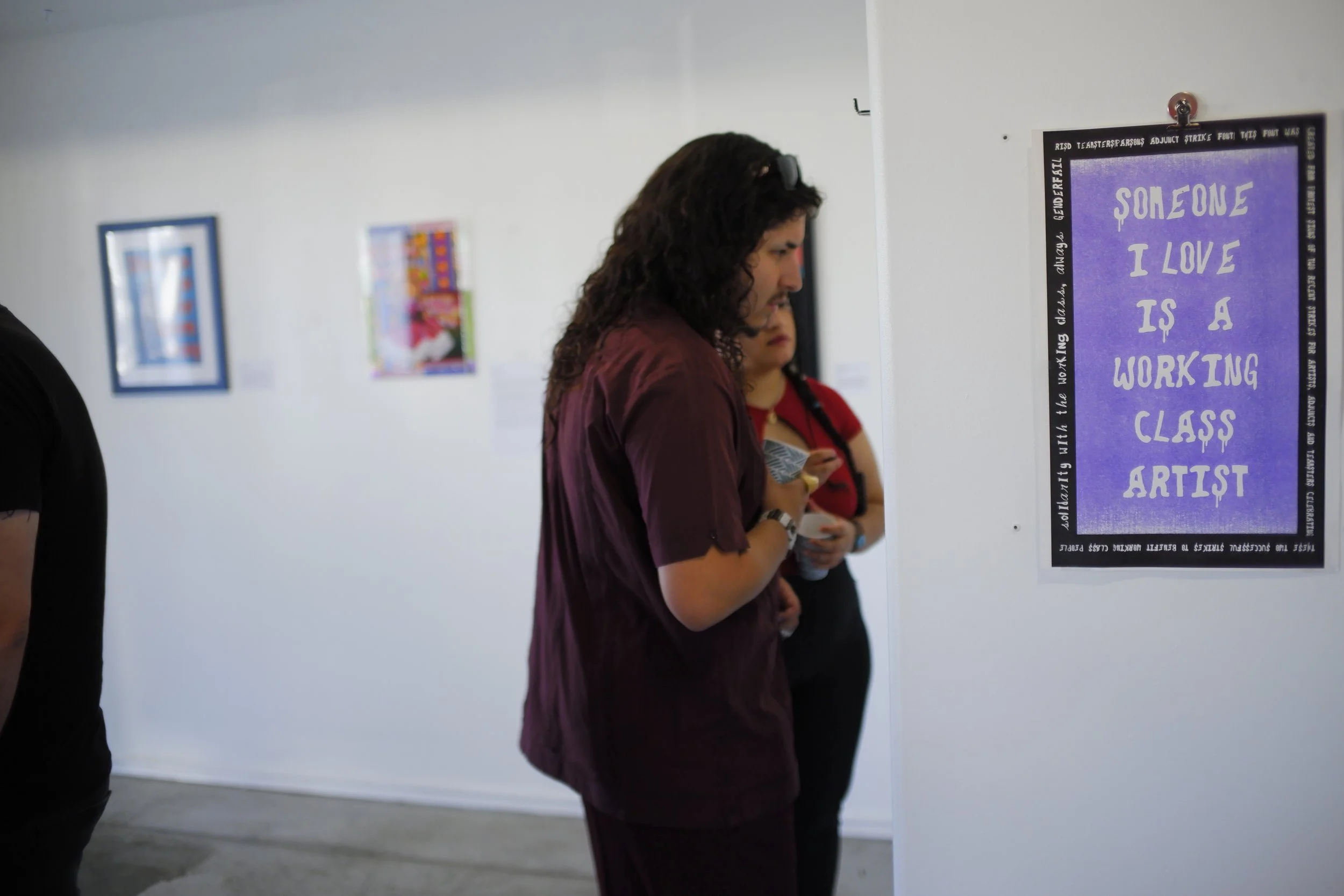
There were 29 total respondents.
-
48% - Artists or Culture Bearers
31% - Closet Creatives
10% - Stakeholders or Hosts
10% - Creative Consumers
Participants were asked to self-identify. There were given the following options/definitions.
An Artist or Culture Bearer: Whatever you do or create, cultivates culture and stokes expression. Your primary income may or may not be related to this practice. You may or may not identify as a "professional."
A Stakeholder or Host: You provide support to artists by investing resources, hosting space, or facilitating creation, even if you do not primarily identify as an artist or culture bearer. If you are completing this survey on behalf of a business, organization, or institution, please select this option.
Creative Consumer: You may not identify as an artist, culture bearer, or stakeholder/host, but you actively participate in creative spaces. Engaging with art and culture is central to your social life, a meaningful hobby, or an important pastime.
Closet Creative: You regularly engage in artistic hobbies or creative interests, but you do not identify yourself as an artist.
All respondents provided demographic information. Each identity group was given a specific set of questions designed to provide insight into their unique experience and role in the broader creative ecosystem, or Joyscape. Our intention was to highlight intersections of experience, opposing perspectives, and leverage points for Joy Access. Respondents were permitted to submit for multiple identity groups, through separate submissions (meaning you could only respond for one group at a time).
-
Gender:
58.6%: Female
27.6%: Non-binary
10.3%: Male
3.4%: Decline to state
Sexuality:
41.4%: Queer
31%: Straight
13.8%: Gay/Lesbian
10.3%: Bisexual
3.4%: All of the Above (this is one silly person who took advantage of an error in our form)
Race/Ethnicity:
58.6%: Latinx/Hispanic/Chicanx
24.1%: Caucasian
13.8%: Multi-racial/Mixed Heritage
3.4%: Latinx/Middle Eastern (self-definition)
Age:
51.7% : 26-35
34.5%: 35-50
13.8%: 18-25
-
24% of respondents were students.
27% of respondents reported experiencing a disability.
27% of respondents reported being a parent or caregiver.
-
The following zip codes were represented:
93242
93701
93702
93704
93705
93612
93650
93722
93725
93726
93727
93728
-
Youth & Elders : We had no one under 18 or over 50 respond to our survey.
Men: We had very few male respondents.
Black , South Asian, Asian, Middle Eastern, and Indigenous experiences were missing from our respondent data.
Trans folx- we consider trans men, men and trans women, women, but plan to offer the specific identifiers in future data collection as their unique experiences are important.
Stories from Artists & Culture Bearers
-
85.7%
of respondents reported spending at least 5 hours weekly on average devoted to creative practice, promotion, or "business.”
-
64.3%
identify as professionals.
-
14.3%
of respondents spend at least 20 hours weekly working professionally.
-
14.3%
of respondents spend 30-40 hours weekly working professionally.
-
92.9%
of respondents say that they have access to less than 5 hours weekly to receive training or mentorship.
-
21.4%
of respondents report spending between 5-20 hour weekly providing mentorship or training.
-
85.7%
of respondents report receiving payment for their skills and time.
-
85.7%
of respondents reported that less than 5 hours of their creative practice, business, training or mentorship is compensated time.
-
53.8%
of respondents report having issues procuring payment for services rendered.
Artist Ratings
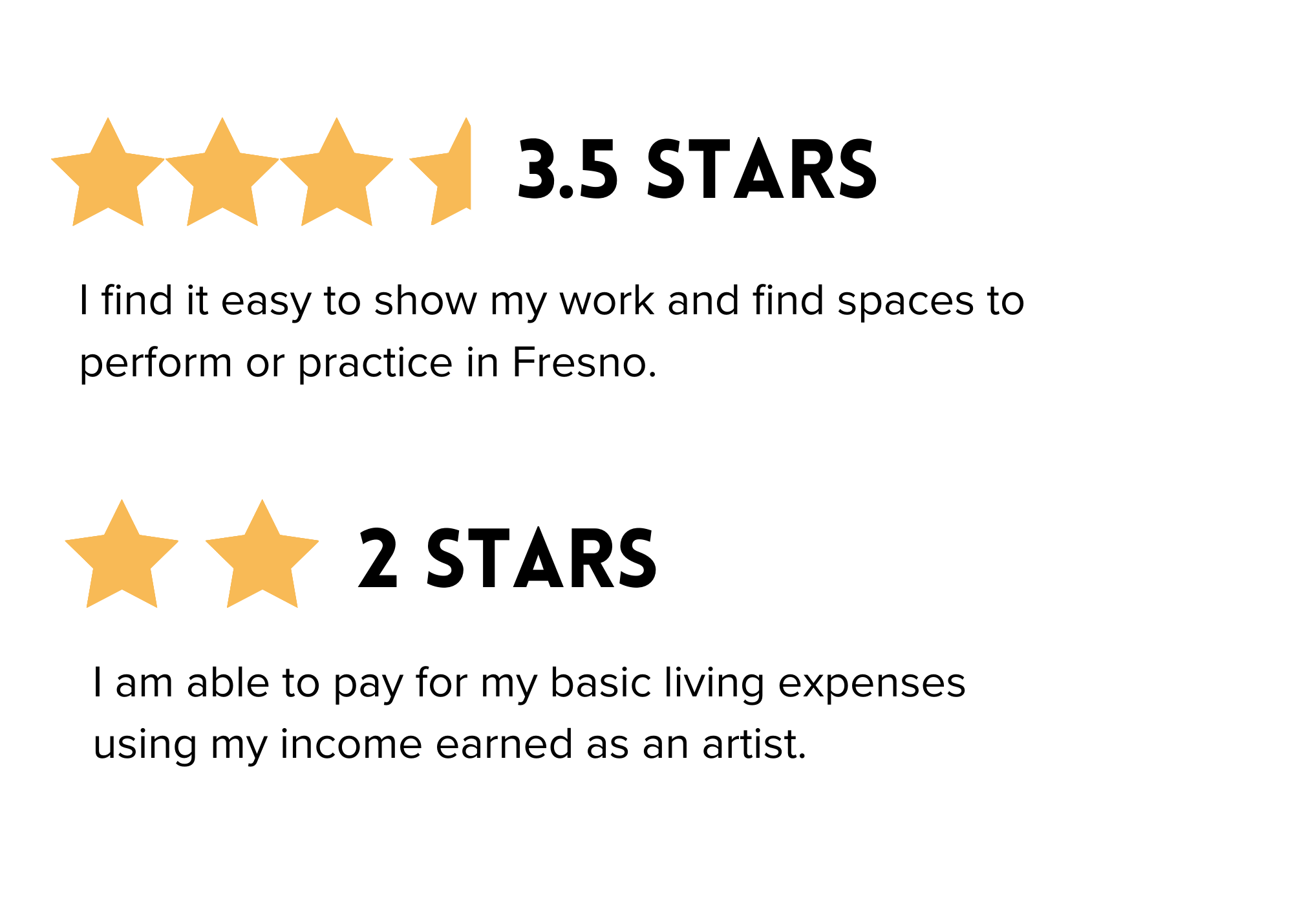
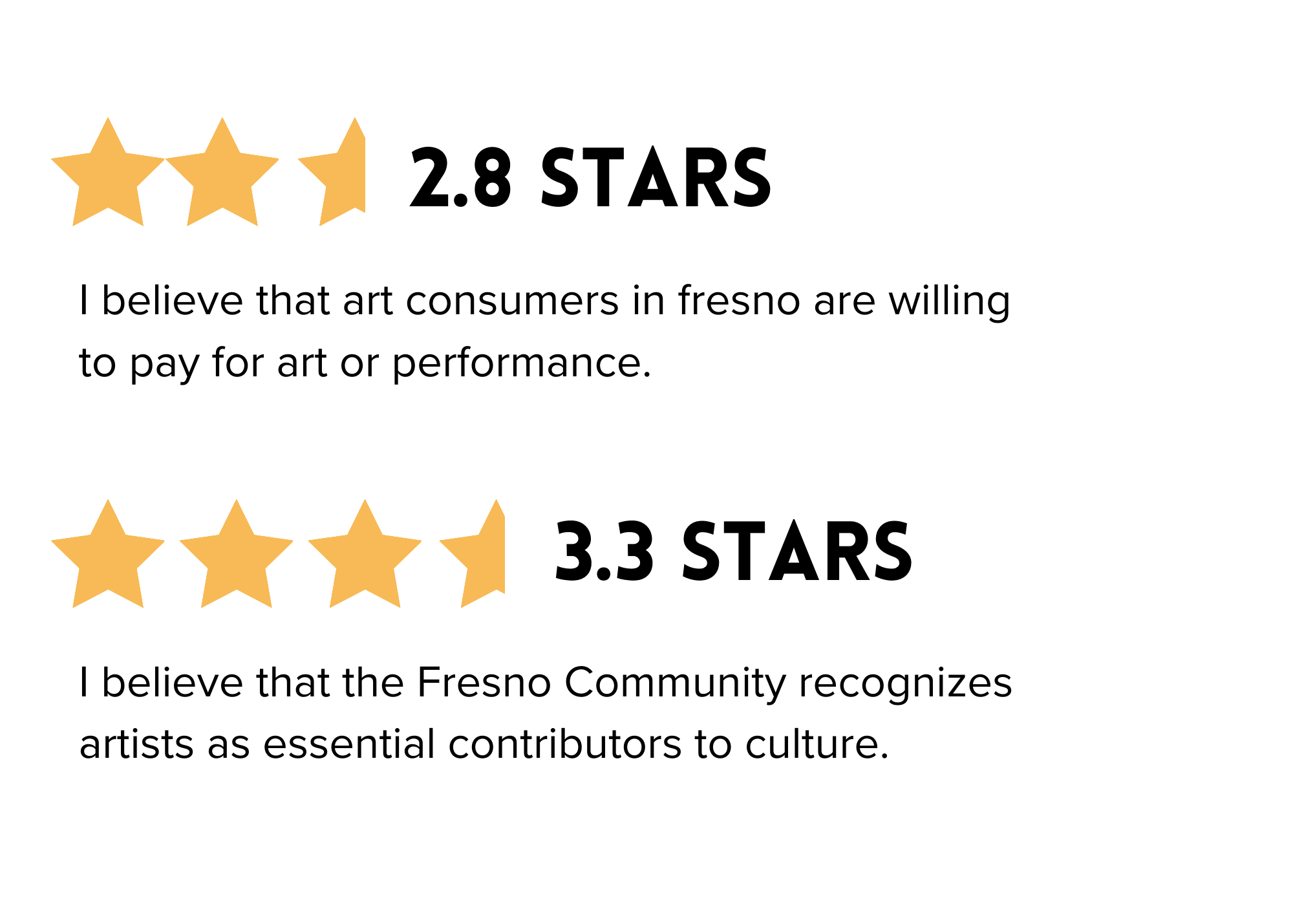
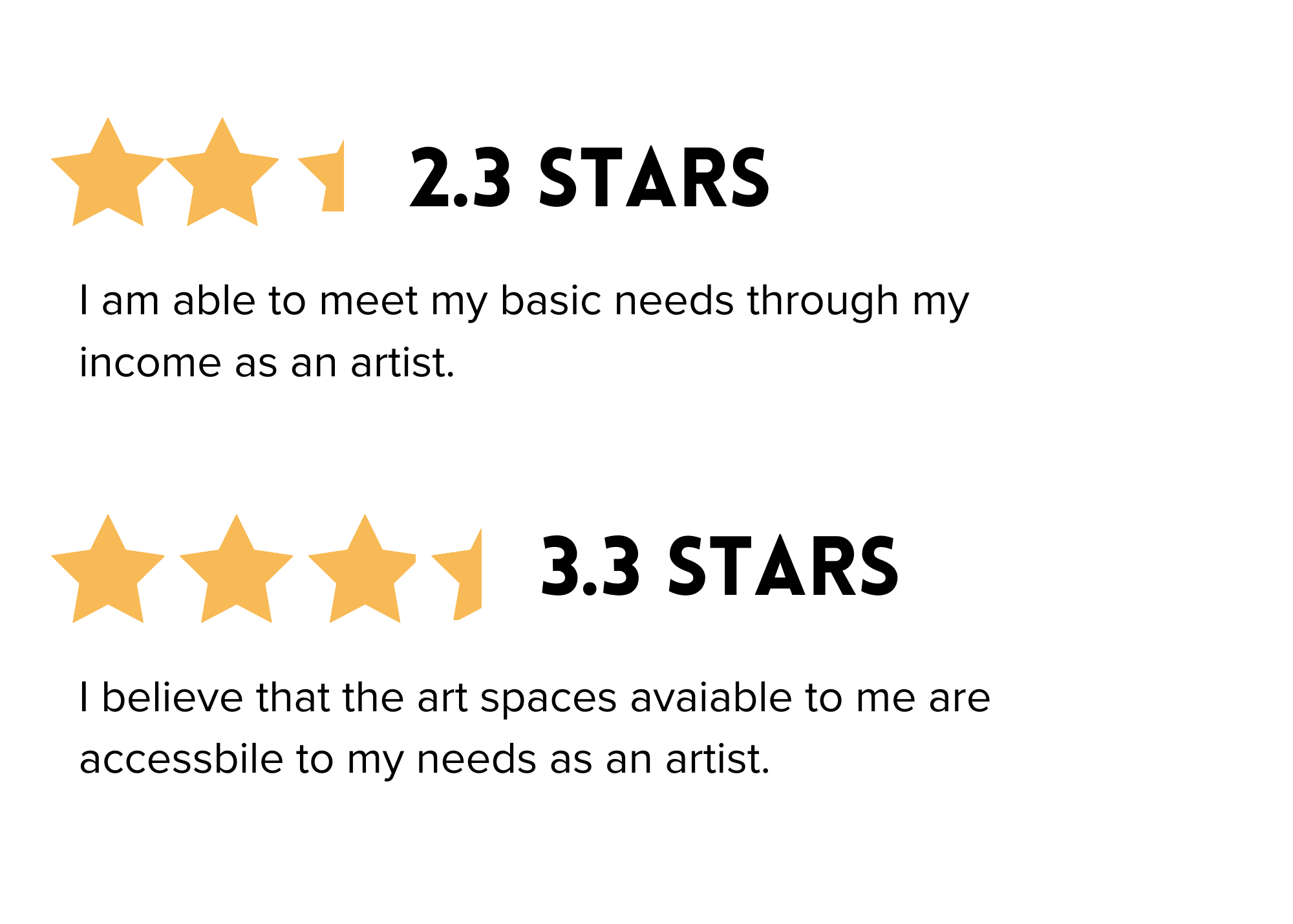
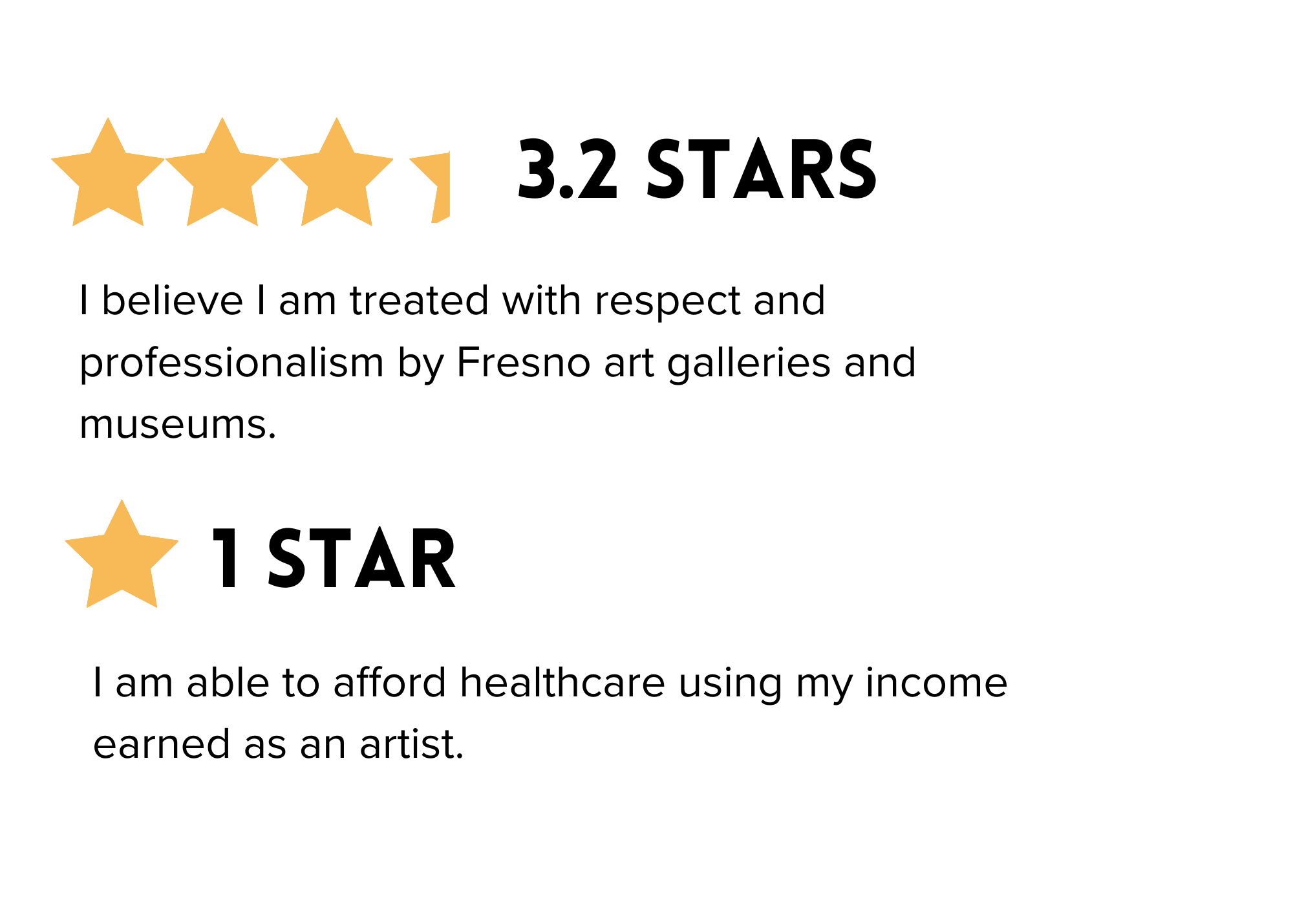
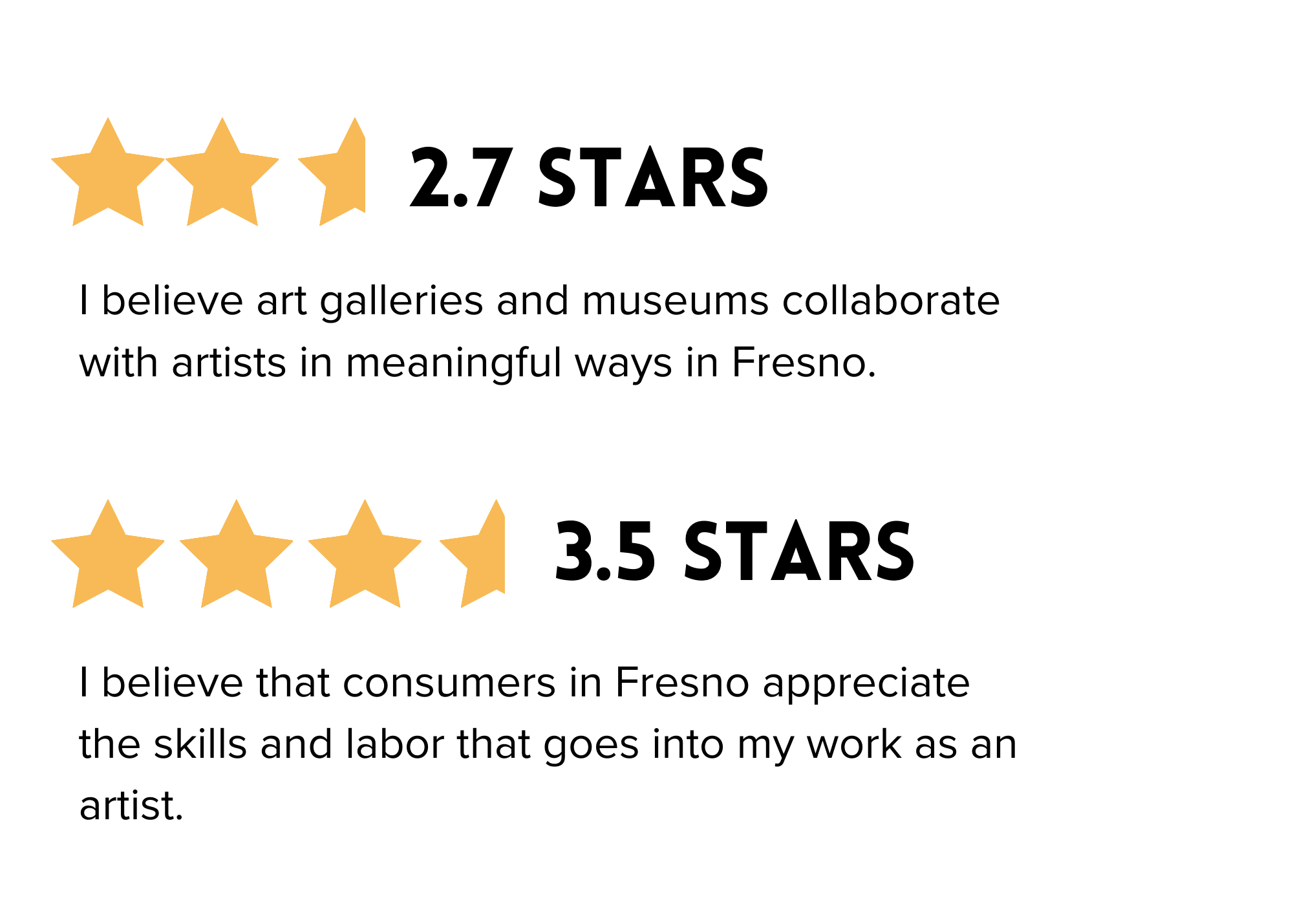
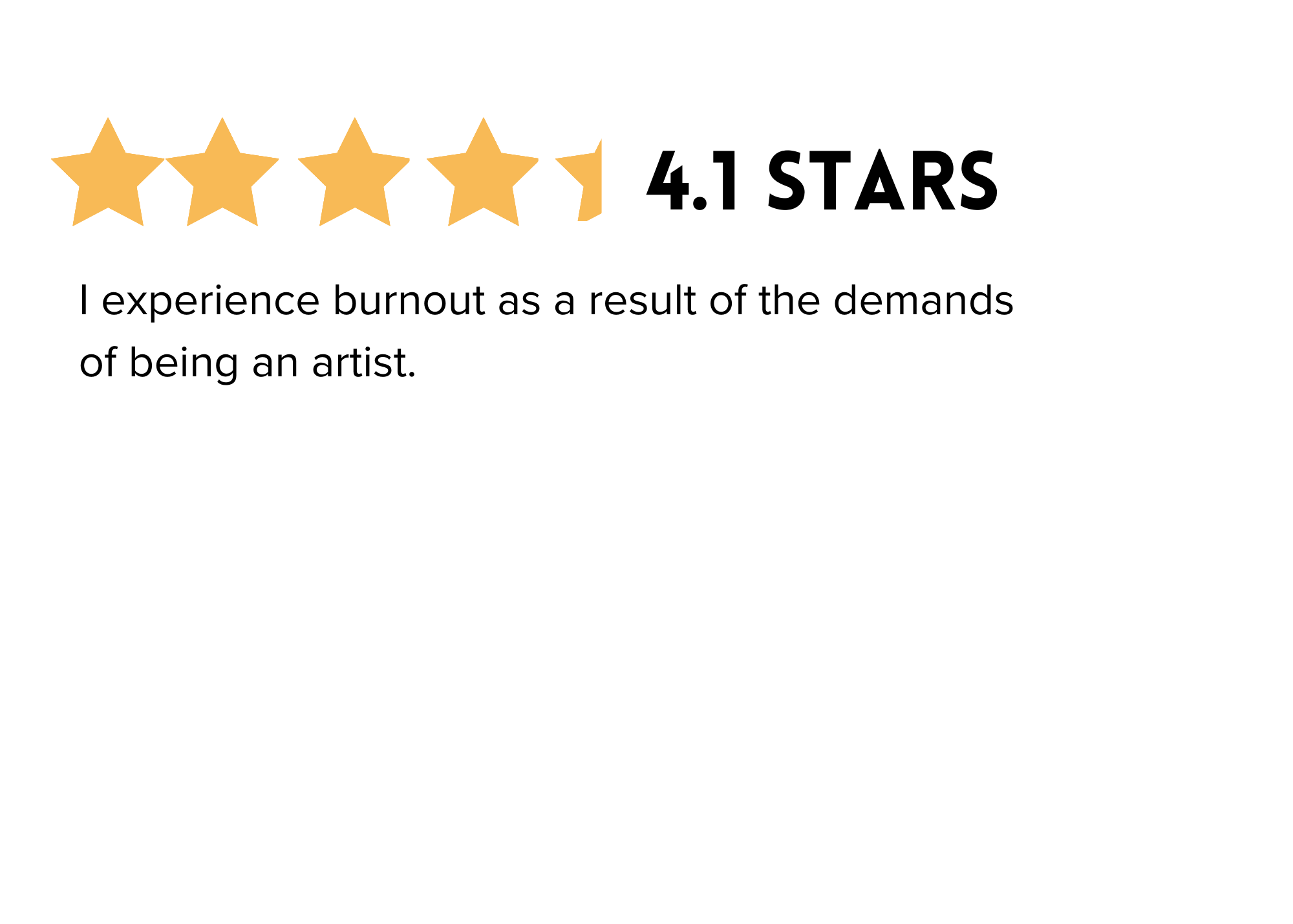
We asked respondents to rate their experiences through a series of statements about the JoyScape in Fresno. To the right, you’ll find information about how we gathering the data. Below, you’ll find the statements & their associated ratings. The final rating is an average of all ratings, reflecting the overall rating of the Fresno JoyScape.
*Please note that those on smartphones might find the layout to be different. We trust you’ll manage.
-
We used a 5-point scale with a neutral middle.
Respondents were told the following about the scale: (1 is not true at all, 3 is does not apply, 5 is very true).
Respondents were provided the statements about their experiences such as: In Fresno, Galleries/museums treat artists with respect and professionalism.
Respondents were asked to rate their how true the statement was based on their personal experience.
-
In research, ratings with a neutral middle improve data accuracy by allowing respondents to answer honestly — rather than forcing them to provide a false positive or negative choice. They prevent data distortion, increase survey comfort, and provide balanced, authentic feedback.
Neutral Midpoints generally result in reduced response bias, improved accuracy, increased authenticity, and a better user experience.
-
Results are calculated by taking the average rating. This means adding up each individual rating and dividing by the total number of rating responses.
-
If this question doesn’t make sense to you, it’s asking why provide the overall rating (4/5 stars) versus the numbers for individual ratings (30% of people rate 1/5, 60% 3/5, and 10% 5/5).
There are a few reasons.
1) The purpose of the survey is to understand the conditions of our collective experience. An overall rating does a better job of showcasing this.
2) Overall ratings are easier for the average person to interpret.
3) Overall ratings provide more clarity about how to improve our Joyscape and conditions that shape it.



Artists were given the opportunity to complete the following prompt.
“Fresno would be the most wonderful place on Earth to be an artist if _________."
“Artists and creatives valued one another and non-creatives paid artists a fair price.”
“(We were) deeply supported and valued.”
“Being an artist meant more than a performance to clout chasers.”
“Housing and food were more affordable.”
“There was easier accessibility to material/art knowledge/space to create works of art.”
“Art classes and education was more accessible for people who can’t access college.”
“We had good fun safe places and events to work and sell.”
“Art was not just seen as a hobby but as a life skill and profession.”
“(We) had a modern art museum with a state of the art performance stage.”
“Everyone was paid a living wage. If everyone had basic minimum income and didn’t have the stress about scrambling to stay afloat, so many people would have the means to support artists. No one in my neighborhood is buying art. We can’t afford it. I am a serious artist but I know that if I’m going to find financial success it will be in other parts of the state.”
What’s Next?
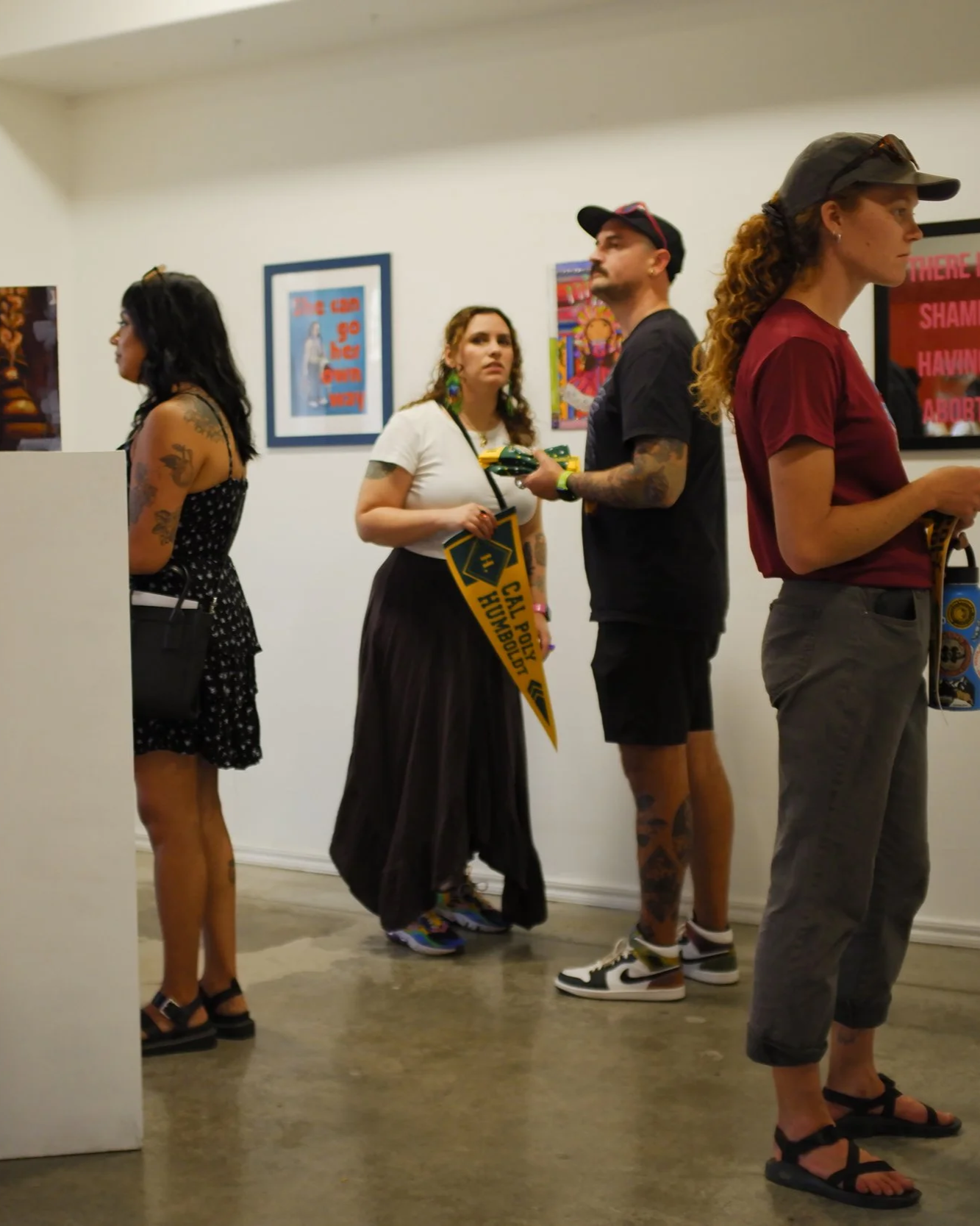
We believe that Fresno could be a place where artists go to thrive.
We believe that there’s a need for creatives in Fresno & our community to engage in organized solidarity economies. We know that Fresno’s art scene deserves investment and we also think that starts with US. How do we take care of each other? How do we create reciprocity, sustainability, and belonging that stokes joy, excellence, and well-being?
It is notable that much of our data echoes Cultural Arts Plan, published 3 years ago.
We look at groups like Twin Cities United Performers, The Guaranteed Basic Income for Artists (Creatives Rebuild NYC), and Ink People Center for the Arts as a just a few examples of what is possible when communities unite to steward landscapes that center culture & well-being as the baseline.
When we consider the both the history and present moment—- we believe there’s never been a better time to be a dreamer, artist or caring community member in our city. Fresno needs us, our vision and our action (see: City of Fresno 2024-2029 Comprehensive Economic Development Strategy Fresno Highest Needs Neighborhood Report, 05/2024 Report by Urban Institute).
At The JoyCore Project, we hope to contribute to a collective cultural shift around how we engage with both the challenges and the strengths of our city and region. We think that solutions should not just acknowledge inequity, but center Joy Access.
This first round of data-sharing focused on our artist respondents. We plan to share what our closet-creatives, stakeholders, and creative consumers had to say next.
Future research and storytelling will center those named as underrepresented groups. We’re also interested in exploring the experiences of families, youth, elders, and people with disabilities.
We’d love to hear from you — reach out to jadeatjoycore@gmail.com or drop your information below.